Pebl vs G-P
Pebl: Next-gen EOR that moves faster than G-P
G-P’s extra processes can slow you down. Pebl delivers enterprise-grade EOR with the speed, transparency, automation, and accountability today's companies need.
Pebl vs G-P: Which EOR wins?
Choosing an EOR isn’t just about choosing software. It’s about payroll, compliance, support, and the employee experience behind every hire. Here’s where Pebl and G-P differ.


Four reasons why G-P lags behind Pebl
Global Employment Shouldn’t Weigh You Down
“Enterprise ready” can quickly turn to enterprise drag with G-P’s manual processes, unpredictable costs, and slower execution.
Compliance Isn’t an Excuse for Slow Execution
G-P’s approach is dependent on extra reviews, handoffs, and service layers that slow hiring, payroll changes, and everyday employee operations.
Don't Mistake Coverage for Consistency
G-P's delivery model should be carefully evaluated country by country. Differences can create an inconsistent and inefficient experience for HR teams and employees.
Modern AI Should Reduce Work, Not Just Explain It
AI should help HR teams move faster—not provide gated compliance guidance while work continues through manual processes and service layers.
The real G-P may show up after you sign
Instead of expert guidance and a reliable platform, customers found unhelpful AI, broken workflows, slow support, and benefits that fall short.

AI without real answers
“I find G-P not smart enough. The AI chat only answers questions directly about the contract, but when I want to know about the employee law in my country, it doesn't provide any info. It's not intuitive, so I have to use ChatGPT on the side.” Tiffany L.
A broken support system
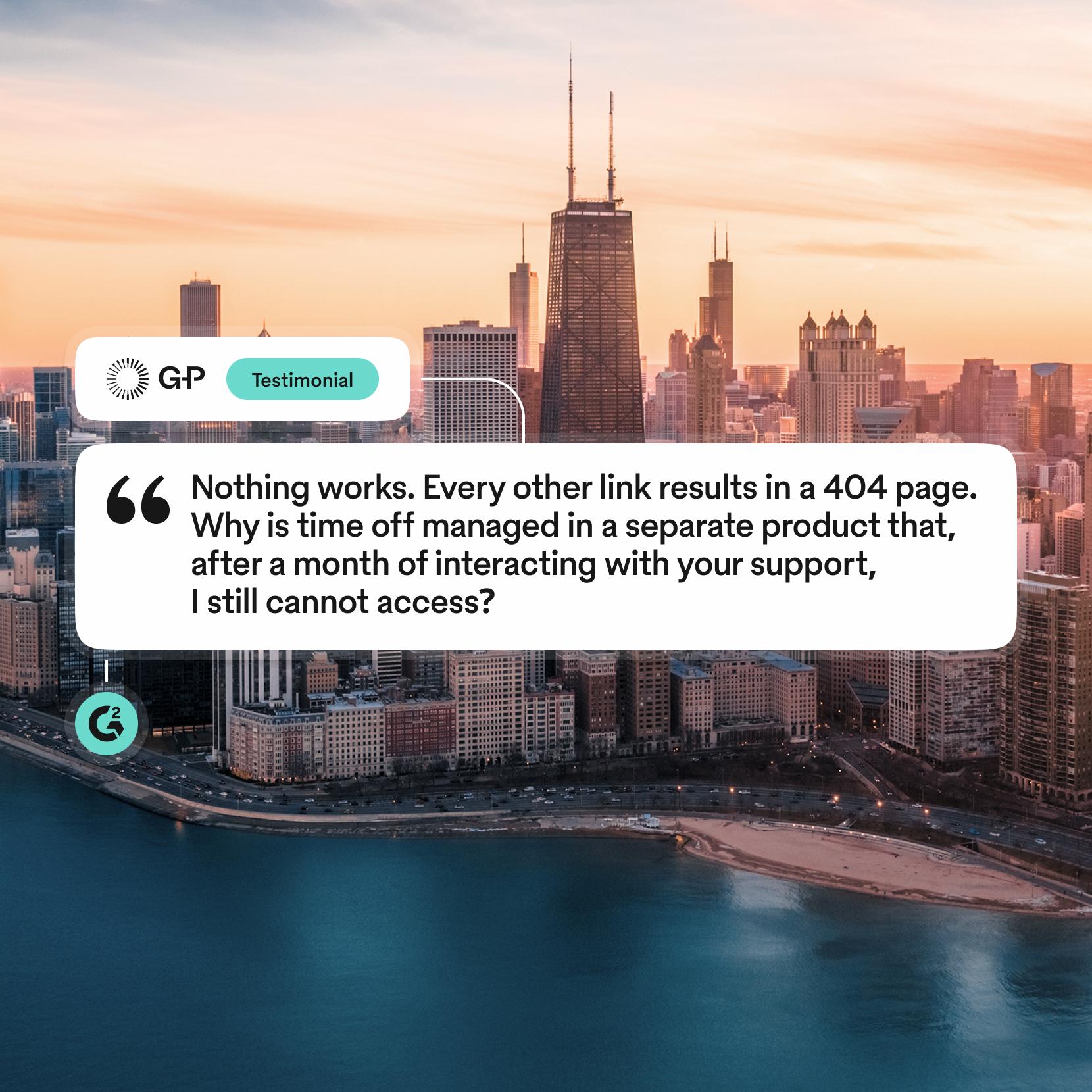
“Nothing works. Every other link results in a 404 page. Why is time off managed in a separate product that, after a month of interacting with your support, I still cannot access?” Verified User in Computer Software, Enterprise
Bottlenecks are everywhere
“The support portal is terrible. I've seen it take > 1 month to create an account in Zoho to approve expenses. How is that even possible?” Verified User in Computer Software, Mid-Market Verified User in Computer Software, Enterprise
Why choose Pebl
Pebl combines embedded compliance, expert support, and AI-powered workflows in one modern platform—without unnecessary cost, complexity, or delays.
Built to scale faster with confidence
Pebl gives you the speed, support, and trust to grow anywhere. Hire and onboard in minutes, backed by 24/7 support, 99.9% payroll accuracy, and an 80+ NPS.
Modern AI that moves work forward
Alfie is built into Pebl to automate workflows, surface insights, and help HR teams take action across the employment lifecycle—helping teams move faster, not just find answers.
Pricing you can plan for
Budget beyond the monthly fee. Pebl helps you plan for FX, payroll changes, contract updates, and offboarding—not just onboarding.
Consistency you can scale with
Pebl delivers a consistent experience across 185+ countries, with 66 Pebl-owned entities and 90%+ of supported employees managed through Pebl-owned entities.
Pebl vs. G-P: What actually matters
The numbers behind Pebl
Global employment is too important to take on faith. Here are the stats behind Pebl's performance, expertise, and infrastructure.
185+
Countries supported
250+
Integrations
100+
Passed employment and financial audits
99.9%
Payroll accuracy and timeliness
85%
Tickets resolved in under 24 hours
5X
NelsonHall Global EOR Leader
What our customers say
The best proof isn’t what we say. It’s how our customers feel about hiring globally with Pebl.

I've had an exceptional experience with my HR at Pebl. Their support has been invaluable, offering tremendous assistance throughout.
Pebl helped our team onboard an extremely critical member of our international team in a short turn around time.
We now have employees across six countries and wouldn't have been able to do this without Pebl.
We appreciate their high-touch approach and emphasis on compliance. They are also delightful to work with and highly responsive.
I really like that Pebl makes it very easy and convenient for my company to hire international employees fairly quickly.
Pebl has helped us understand what is required to hire someone outside the US.
It is such a gift to be able to rely on the expertise of another organization for areas we don't have time to be the experts in.
Pebl is an essential partner in our high volume hiring and onboarding outside of the United States.
From my experience, the staff has been wonderful and very easy to work with.
I've had an exceptional experience with my HR at Pebl. Their support has been invaluable, offering tremendous assistance throughout.
Pebl helped our team onboard an extremely critical member of our international team in a short turn around time.
Pebl helped our team onboard an extremely critical member of our international team in a short turn around time.
We now have employees across six countries and wouldn't have been able to do this without Pebl.
We appreciate their high-touch approach and emphasis on compliance. They are also delightful to work with and highly responsive.
I really like that Pebl makes it very easy and convenient for my company to hire international employees fairly quickly.
Pebl has helped us understand what is required to hire someone outside the US.
It is such a gift to be able to rely on the expertise of another organization for areas we don't have time to be the experts in.
Pebl is an essential partner in our high volume hiring and onboarding outside of the United States.
From my experience, the staff has been wonderful and very easy to work with.
I've had an exceptional experience with my HR at Pebl. Their support has been invaluable, offering tremendous assistance throughout.

Our CEO loves the fact that working with Pebl means we don’t need to handle everything ourselves, employ HR people in-country, or worry about compliance.
Ellen Bockelman
Chief People OfficerSwitch to Pebl today
We’ll buy you out of your contract. Then a dedicated migration team will handle the move, so you can make the switch without disrupting your people, payroll, or operations.

Frequently Asked Questions
Global employment has evolved beyond legacy models like G-P. Pebl delivers enterprise-grade compliance, risk mitigation, speed, AI-powered workflows, transparent costs, expert support, and accountable execution without the delays and overhead of a traditional EOR.