Why Global Hiring Is the New Default
For years, global hiring has been seen as an ambitious experiment reserved for startups chasing talent in far-flung markets or multinationals with teams on every continent....

Where performance meets possibility
See how Pebl helps you hire, pay, and manage talent anywhere.
For years, global hiring has been seen as an ambitious experiment reserved for startups chasing talent in far-flung markets or multinationals with teams on every continent.
That era is over.
Inflation, shifting immigration policies, and relentless competition for skilled workers have rewritten the rules of workforce strategy. The smartest leaders are no longer asking if they should hire globally, but how fast they can make it happen.
Pebl’s 2025 Global Hiring Report surveyed over 400 HR and finance leaders from the U.S., U.K., and Germany to find out what’s behind this global shift. It paints a picture of a world where hiring beyond borders has become the sharpest advantage a company can build—if they act fast enough.
The rise of global teams
What used to look like experimentation now feels like common sense. Nearly half of the leaders surveyed expect most of their new hires to come from outside their home country within two years:
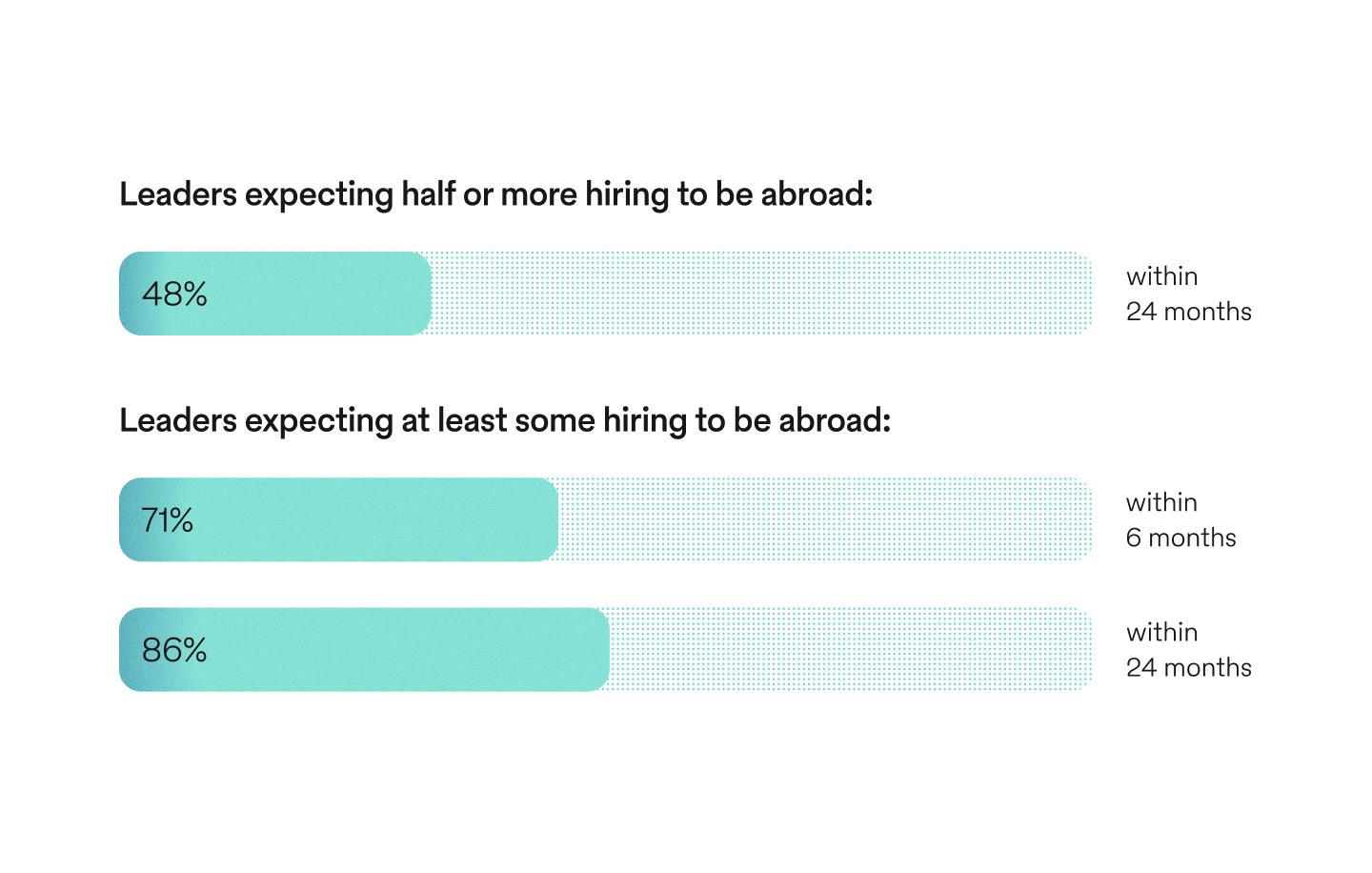
The companies behind these numbers aren’t chasing hype, they’re preparing for what’s next. They’re building flexibility into how they grow.
In a world where economic cycles tighten and talent expectations expand, global hiring gives organizations options. The companies that win tomorrow will be the ones who can get the right talent wherever it exists in the world.
Pressures shaping the shift
Behind the acceleration are practical realities that no leader can ignore. Rising U.S. wages and persistent skill shortages are pushing employers to widen their search. Half say those cost pressures are directly accelerating international hiring:
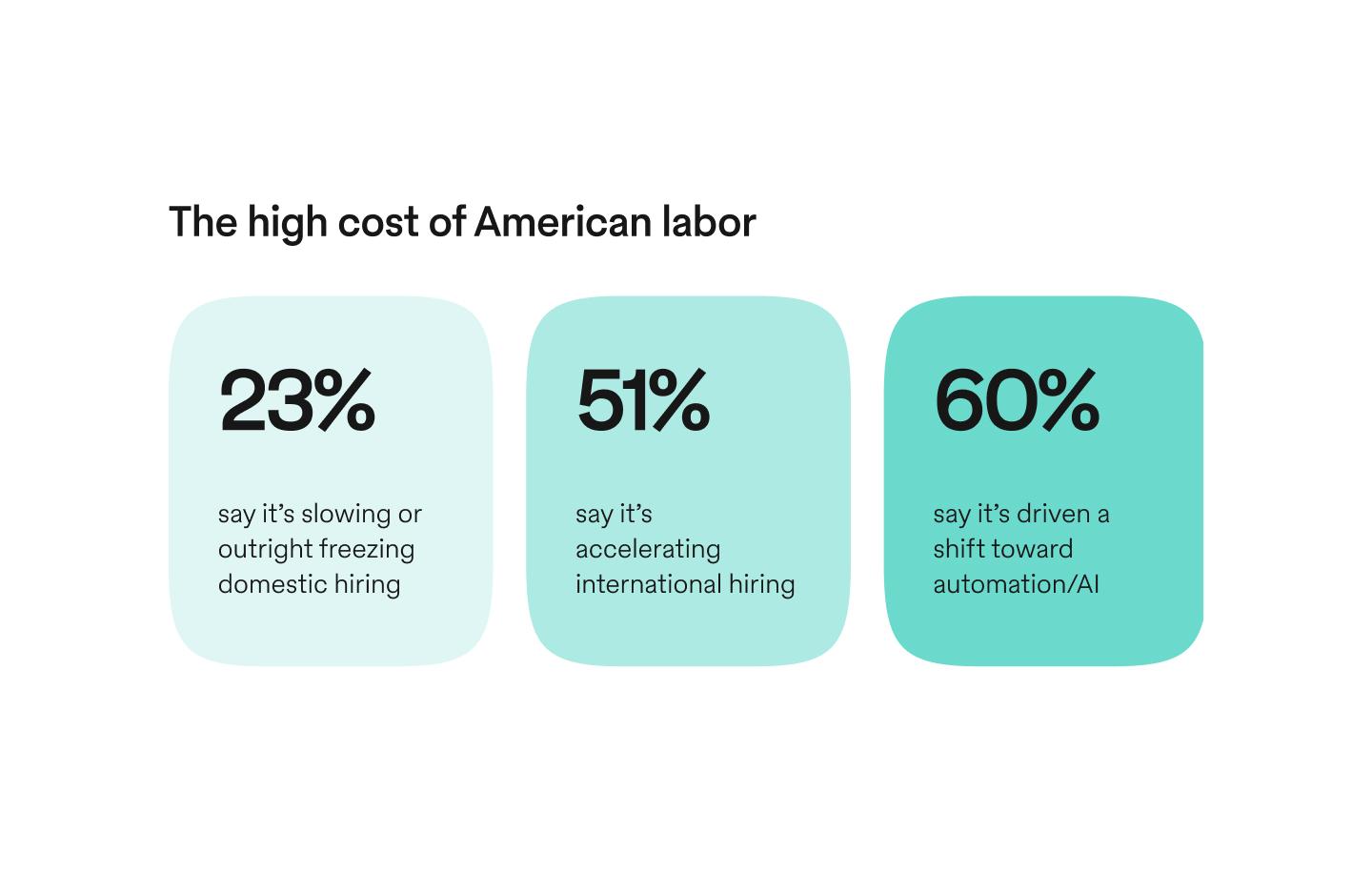
At the same time, the conversation about artificial intelligence has created a kind of distraction. Yes, AI is transforming how we work, but global hiring is transforming who gets to participate in that work.
The future won’t be defined solely by automation. It will be defined by access—by whether businesses can reach the best person for the job, wherever that person lives.
Smart leaders are building geographic agility: the freedom to assemble world-class teams without being constrained by national borders. As Pebl CEO Francoise Brougher puts it, “Companies are no longer treating global hiring as a backup plan—it’s becoming the default strategy.”
Agility and advantage
This is about more than numbers on a spreadsheet. It’s about how organizations grow stronger through diversity and reach.
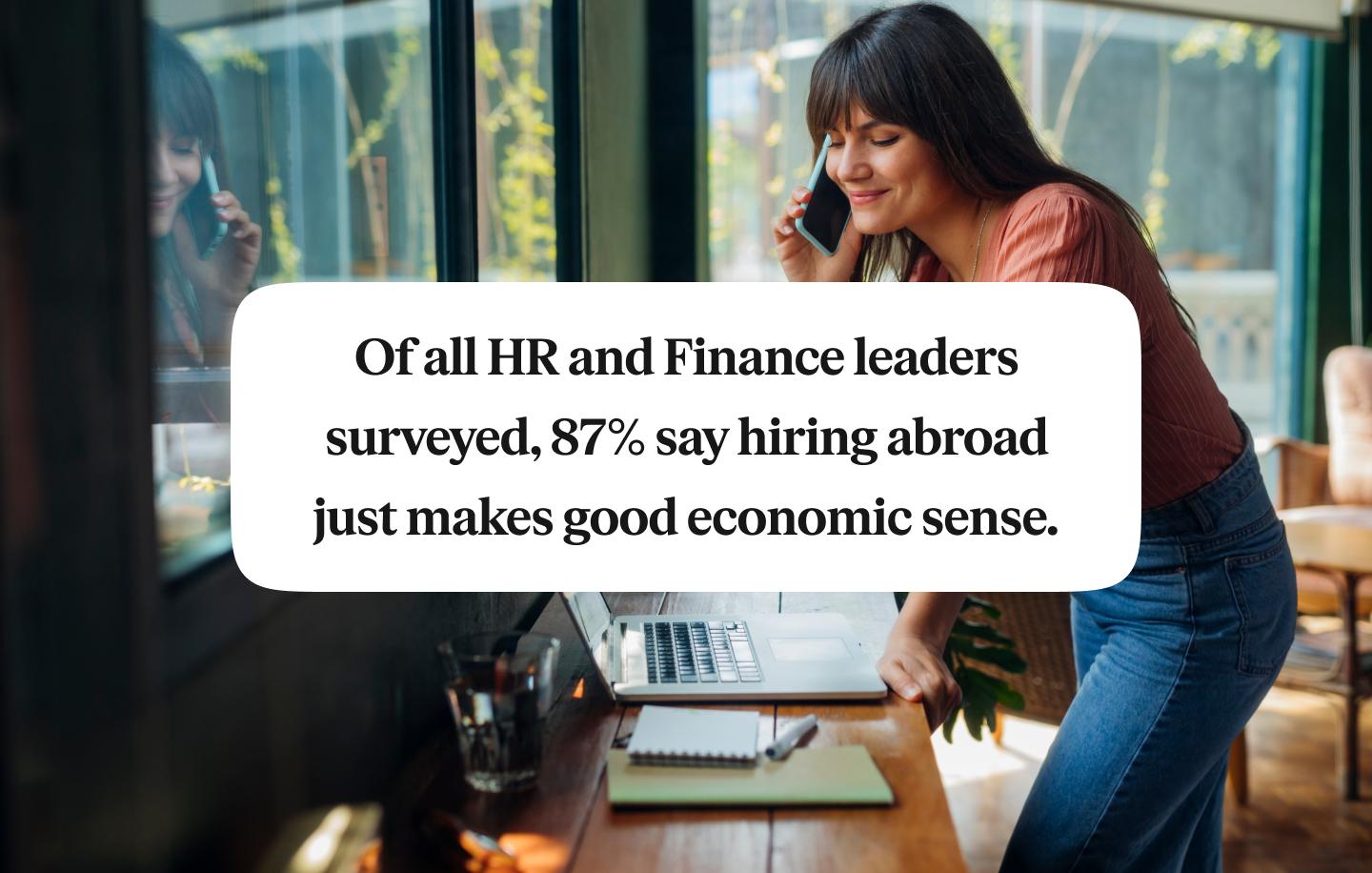
When teams span cultures and time zones, they see around corners others can’t. They adapt faster, think broader, and connect with customers in ways that uniform teams rarely can. Eighty-seven percent of HR and Finance leaders in the survey say hiring abroad simply makes good economic sense:
But the real payoff is human: new perspectives, deeper resilience, and the confidence to scale without boundaries.
Global hiring isn’t about cost-cutting—it’s about ensuring you’re able to build with the best, wherever they live.
Looking ahead
The question is no longer “Should we hire globally?” but “How quickly can we build the systems that make it possible?”
Pebl’s 2025 Global Hiring Report shows that the answer is already taking shape. Across industries and borders, leaders are finding new ways to grow smarter, faster, and more human.
Explore the full Pebl 2025 Global Hiring Report to see the data behind this shift and what it means for your strategy.
Draft compliant contracts in minutes
Tell us where you are hiring and we will map the fastest compliant path, all through one point of contact.